Get curious. Stay secure.
Fear makes people brittle. Curiosity makes them careful.
I’m Lee Anderson. I spent sixteen years on the attacking side of security, learning how people get talked into things. Now I teach the other half of that: how to notice the moment before you react.
The real problem
Most attacks don't beat your technology. They beat your attention.
A convincing message manufactures urgency, and urgency is the state where people stop thinking and start reacting. That’s the moment the attack needs.
Which is why security training built on fear tends to backfire. It produces the exact state that makes people easy to fool. The skill worth teaching is noticing.
Where to start
Three ways in
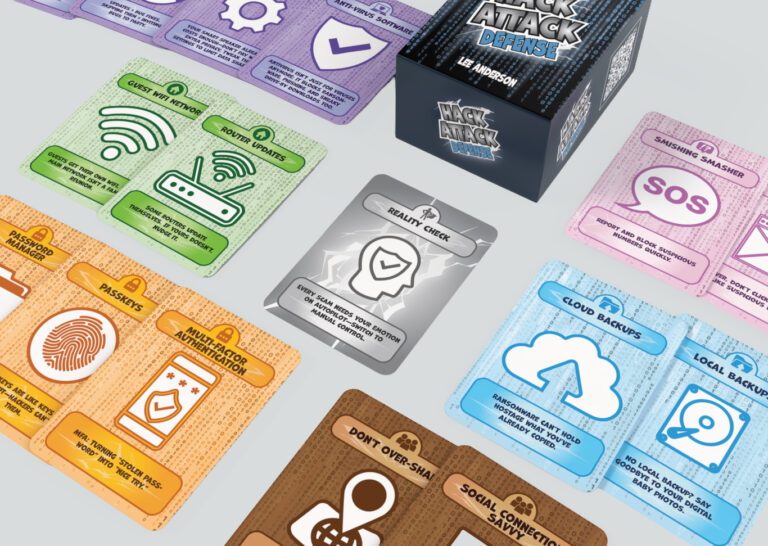
Play — card games that let people safely experience real attacks
Hack Attack: Defense turns real attacks and real defenses into a game families, classrooms, and teams actually want to play. 2–6 players · 15–30 minutes · ages 10+
Train — workshops for teams tired of compliance videos
A live session built on play and discussion instead of a slide deck and a quiz. People leave able to recognize what an attack feels like — which is what they'll actually be up against.
Think — essays on attention, manipulation, and why smart people click
The interesting question was never why people fall for it. It's what's happening in the half-second before they do.
Background
Who's behind this

Sixteen years in offensive security — social engineering and adversarial emulation
Designer of Hack Attack: Defense, published 2026
Master's degree in Learning Experience Design and Educational Technology, 2025
Conference speaker
Seven years volunteering on child online safety
What I'm thinking about
Longer pieces on how manipulation actually works — and what to do about it that isn’t just being more afraid.
Helping your parents without taking over
A short guide to talking with aging parents about staying safe online — without making them feel like they’re losing their independence. It’s the conversation most people put off because they don’t know how to start.
Occasional essays on the human side of security. Leave anytime.